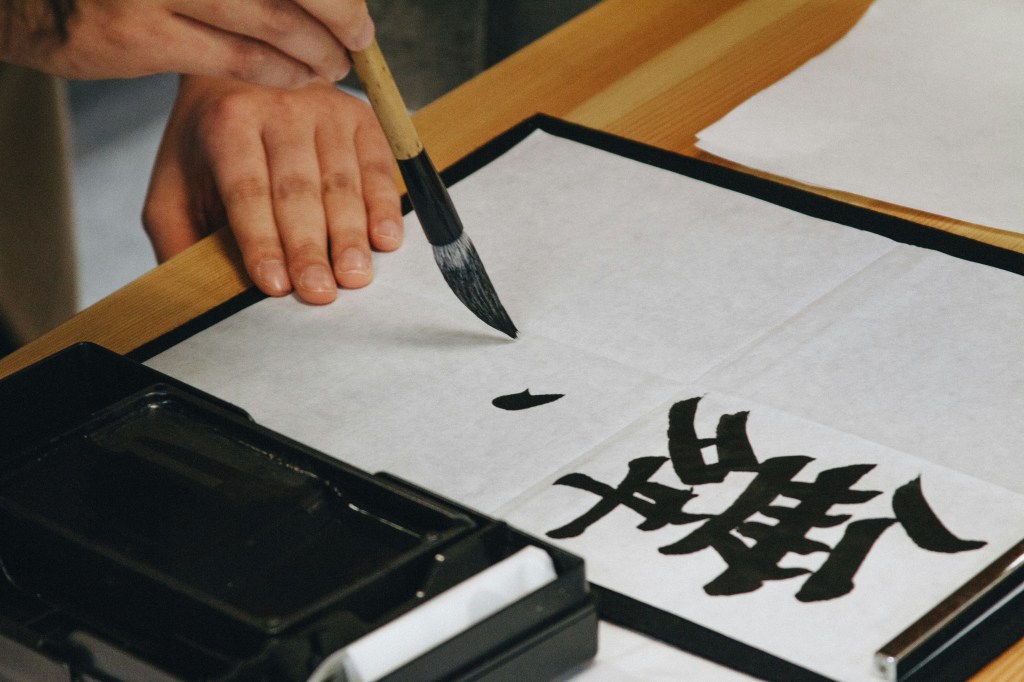
If it weren’t for Steve Jobs attending calligraphy classes at university, it’s possible we wouldn’t have the selection of fonts we do now on our computers. This would be tragic for a number of reasons, foremost among them being that you might not presently be reading this article through the voice of this brilliant typewriter-esque print.
However, there is a more relevant reason to invoke Jobs and calligraphy. In my most recent uni semester, my Hindu Mythology lecturer sat our class down and, convincingly, told us all there was value in learning ‘useless’* things. She argued that, at a time where Arts education fees are extortionate and subjects are only departmentally approved insofar as they contribute to a ‘professionally transferable skillset’, there was an inherent value to learning ‘useless’ things. The study of ancient Sanskrit texts might not help us score a 9-5, she conceded, but it would potentially cultivate a lasting love of myth and storytelling.
The need to stress the value of the ‘useless’ becomes more urgent at a time where educational delivery seems to be driven by outcome, not process. Increasingly, secondary schools seem to publish their proudest articles on final year results day. There seems to be less emphasis on the time a student discovered their passion for architecture in a session on brutalism, or how a music class on Charlie Parker sparked another student’s love for jazz music. Instead, the focus is on the number assigned to that student’s performance. This frames teaching and learning around objectively measurable outcomes, rather than encouraging students and teachers to cultivate moments of subjective and authentic passion. This is part of the reason students spend their time obsessing over outcome-minded tools like ATAR Calculator, rather than devoting themselves to subjects for which they have genuine love.
In my university experience, the same has applied. My own Arts degree, supposed to represent a time of broad engagement with interests for interests’ sake, has a mandated ‘Professional Futures’ component, wherein 24 credit points of my studies must be allocated towards attaining ‘career-ready skills’. Education institutions should not be exam factories and workforce incubators, they should be hubs of exploration, pushing students to discover their passions such that they can live a professional life to be proud of and not resent.
The irony of the current institutional approach is that an exclusive focus on outcome often results in that outcome not being achieved. A tennis player doesn’t play well when they are thinking about the game score during a point, rather than focussing on playing each shot well. Likewise, one does not score well in an exam when constantly thinking about the likely mark they will receive for their answer, but instead does score well when they are critically attentive to and willing to meet the demands of the specific question. Furthermore, one does not present well in a job interview when they care more about the salary attached to the job than love of the job itself.
A poem written by Chuang Tzu and shared with me by my high school Philosophy teacher, a bastion of what education should be, is appropriate here.
When an archer is shooting for nothing He has all his skill.
If he shoots for a brass buckle
He is already nervous.
If he shoots for a prize of gold
He goes blind
Or sees two targets –
He is out of his mind.
His skill has not changed, But the prize
Divides him. He cares,
He thinks more of winning
Than of shooting –
And the need to win
Drains him of power.
When a person thinks only of outcome and not at all of journey, they lose the greatness that is found in loving process.
*I use ‘useless’ to reflect the narrow definition of ‘use’ in terms of vocational applicability.
 Tom Carne